Home

The crisis of the anthropocene*

How do we stay awake to pain without getting crushed? It’s a question humans have asked in one way or another for centuries. You’ve probably heard a lot of answers. Maybe some of them are working. When clients come to me, it’s usually because they’ve reached a crossroads. The resources and ideas they’ve used to deal with it aren’t cutting it anymore.

Our pain tolerance is challenged not just by our personal struggles but by the state of the world. We are constantly virtually connected to an unfathomable number of people, and yet more isolated than ever. The consequences of extreme individualism are coming home to roost on the national stage. From ongoing oppressive structures to newer, bolder cruelties, the future is frightening.

I take strange comfort from Angela Davis’ message. “No amount of psychological therapy or group training can effectively address racism in this country, unless we also begin to dismantle the structures of racism.” Therapy is the beginning, not the end. Therapy is where we go to build our confidence, realize our values, and channel them into action. Holistic therapy recognizes that transformation happens on every level. It happens in the space between people. Over years and in an instant.

* the present era. Defined by human impact on the earth being greater than any other being or force

Specialties

I work virtually with teens and adults around…

  • Complex, intergenerational, and single-episode trauma
  • Gender and sexuality
  • Difficulty with life changes
  • Relationship issues
  • Depression and anxiety
  • Spiritual crisis and exploration
  • Reconnection with ancestors

Methods

EMDR*

A type of evidence-based trauma reprocessing that uses tapping or eye movements. I sometimes describe it as having “one foot in the past and one foot in the present.” Some of the exercises feel like games or imaginary play. It helps people shift patterns and reintegrate memories so that they are less triggering.

Somatic Therapy

A term for a lot of different body-based techniques. My most common tools are meditation, visualization, and movement. We practice noticing the state of the body, listening to it, and working with it. These practices often lead to a greater sense of calm, presence, and empowerment. This approach is great for over-intellectualizers.

Internal Family Systems (IFS)

IFS is based in the idea of a person as a collection of parts. Working with parts can sometimes feel like a spiritual experience. We’ll talk to them, hear their wisdom, and help them relate and react differently. Note I am not a certified IFS therapist and use parts work as a tool rather than a standalone therapy.

Journeying*

This is a broad term for the process of working with various figures, deities, or energetic presences. I provide the environment and conditions for you to meet and engage with them. I also help with boundaries and support around particularly intense or overwhelming energies.

Psychodynamic (Talk) Therapy

When someone in a tv show is in therapy, it’s usually psychodynamic. We use words to explore the impact early life experiences have on you today. It believes that just saying the words out loud to a compassionate witness can make a difference.

Narrative Therapy

Whereas parts work is a tool, narrative therapy is an underlying philosophy. It believes that our worlds are reflected in the language we use. It also emphasizes that the same word can have a very different meaning from person to person.

*These interventions need a lot of resourcing and grounding to do safely. We’ll take as much time as we need to practice calming and strengthening techniques.

About

Too much and not enough

Many of us grow up knowing that something isn’t right. In our child brain we believe it’s us. I’ve seen so many bodies holding the pain of being too queer, too big, too sensitive, too loud, too angry, too dark, too quiet. Of not being enough, not fitting, not measuring up.

Let pain and suffering be a part of life, not an obstacle to it

It makes sense that so many therapies today try to fix suffering. It’s the reason most people come to therapy in the first place. I tried several different methods before settling into my present medley of somatic, spiritual, EMDR, and parts therapies. I settled here because it’s a place where I, along with my clients, can be with suffering. By being with it, rather than fighting or denying it, we set it free.

It may not be our problem, but it is our responsibility

We didn’t create this world, but it’s the one we have. It’s our responsibility, and our opportunity, to carve out the space to expand. Whether you do it with therapy or some other way, the journey starts with you.

If you’d like to learn more, schedule a free 15 minute consultation.

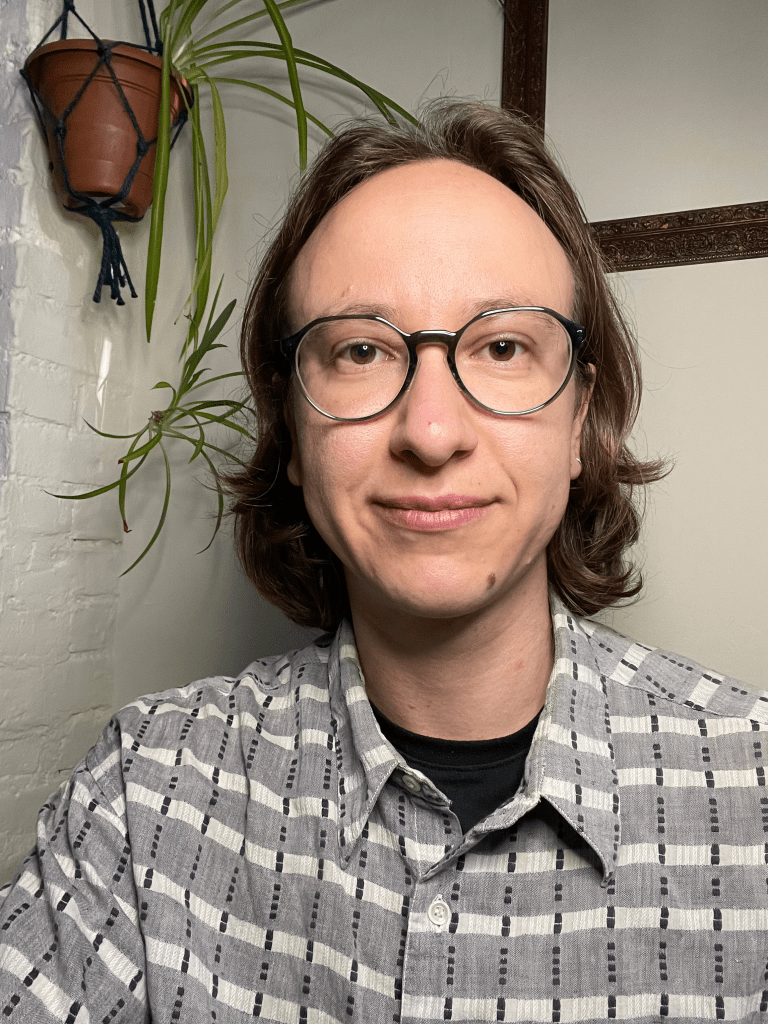
Nino M. Winterbottom, LMHC/LPC

I’m a mental health counselor licensed in New York and Oregon. My career as a therapist was a long time coming. In my previous work with students and people living with cancers, I kept accidentally providing (untrained) counseling. It was clearly time to get the degree. My career as a spiritually-informed therapist is shocking to us all. I come from the opposite of a “woo woo” family and spent my early life ragefully opposed to organized religion, an attitude I am fully capable of channeling to this day.

My spirituality today is ever-evolving. I’ve been on and off the Buddhist path for several years. I’ve seen some things not of this world. Much of my motivation to pursue spiritually-informed counseling comes from the complicated and sometimes tortured relationship of my immediate family to my Christian, Jewish, and nature-worshiping European and Ashkenazi ancestors. Whether our work is explicitly spiritual or entirely secular, the interconnected, intuitive knowledge of all living things is my primary guiding principle.

I received my Masters of Arts in mental health counseling and spiritual integration from Fordham University. I was trained in somatic and attachment-focused EMDR by the EMDRIA-certified Personal Transformation Institute. I have completed trainings in DBT, ACT, IFS, and couples counseling. I include some DBT skills training in my work where appropriate but, as with religion, I have an ambivalent relationship to cognitive behavior therapies (ie. DBT, CBT).

I have learned about engaged Buddhism from Dr. Pilar Jennings, Lama Rod Owens, Rev. Kosen Greg Snyder, the Buddhist Action Coalition, and encounters with green tara herself. Other guides in compassion, suffering, and resistance include writers and artists such as EM Forster, Kazuo Ishiguro, James Baldwin, Virginia Woolf, Ursula K. LeGuin, Hayao Miyazaki, and Ernst Bloch. Clients’ own personal interests and nerdoms are welcome and encouraged in our sessions.